















1. Overview of Den Ba De Temple
1.1. Where is Den Ba De Temple located? Location and geographical features
Den Ba De Temple is located at the foot of Doc Mountain in Do Son ward, about 20 km from Hai Phong city center. Thanks to its "sitting on a mountain, facing the water" terrain, with its back to the mountain and face towards the Northeast sea, this place boasts a harmonious landscape between rocky mountains and the blue sea, creating a sacred space characteristic of the coastal region. The combination of nature and feng shui makes the temple an attractive stop for tourists visiting Do Son.
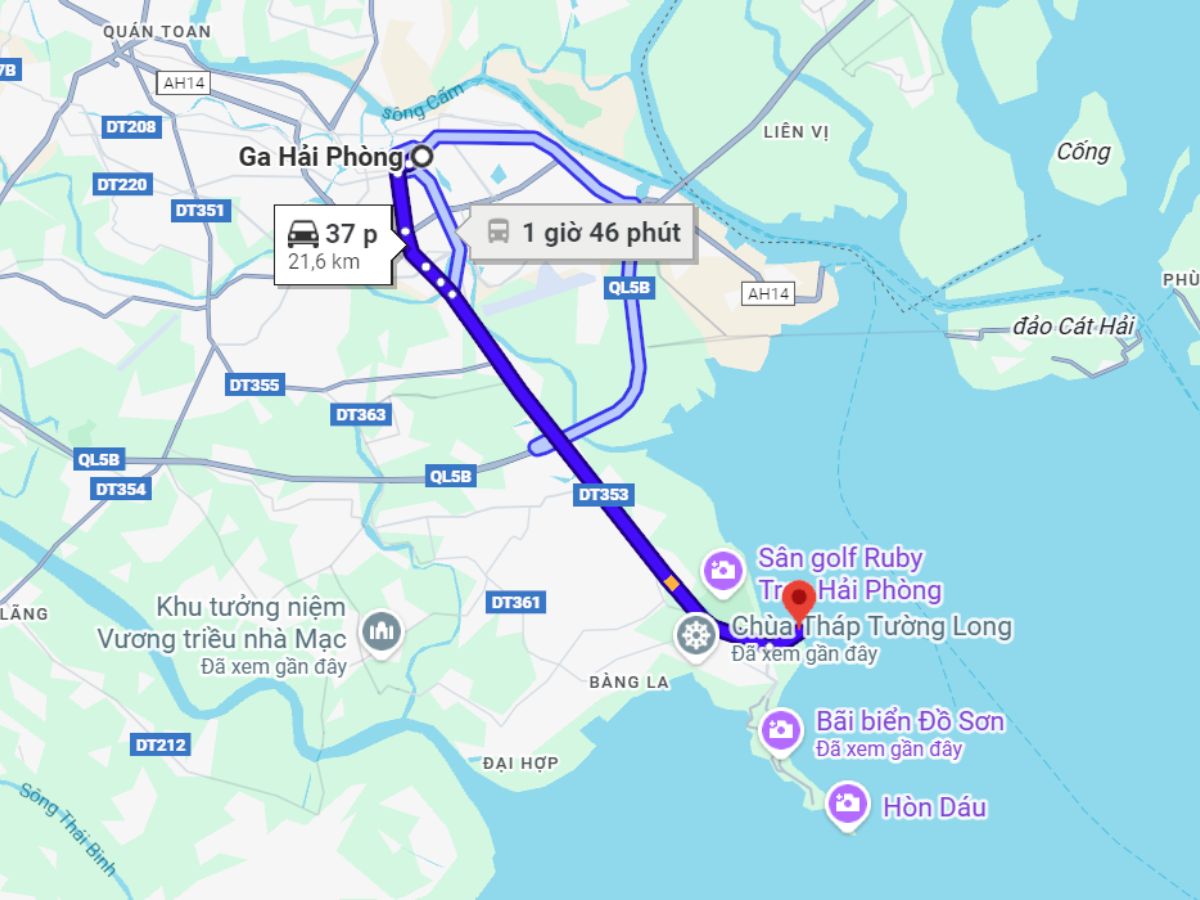
Ba De Temple is located near Tuong Long Pagoda Tower, about 20 km from the center of Hai Phong. (Source: Collected)
1.2. History of Ba De Temple Formation
Ba De Temple was built during the reign of Lord Trinh Giang in the 17th century and was later bestowed the title "Dong Nhac De Ba" by King Tu Duc, affirming its position in the folk belief system. Over time and due to many impacts from the sea, the temple underwent a major renovation in 1988 with contributions from Ms. Luu Que Hoa, along with the construction of a seawall to protect the relic site. These historical imprints help the temple retain its ancient charm while remaining resilient against the sea and sky of Do Son.
1.3. Cultural and Spiritual Values of Ba De Temple
Not only famous for its legendary story, Ba De Temple also holds deep spiritual value for the people of Do Son. Tourists and fishermen often come to offer incense to pray for peace and smooth sailing before each fishing trip. The temple is also a symbol of the Mother Goddess worship and human deity beliefs, where people find protection, vindication, and good fortune in life. This is what has given the temple its enduring vitality in the coastal region's cultural life.
2. Legend of Ba De
2.1. The Story of a Talented and Beautiful Girl and an Unjust Tragedy
Legend has it that Ba De was a virtuous and beautiful young woman named Doan from the Do Son region. Because she was forced into an unwanted marriage with Lord Trinh Giang, she resolutely refused and suffered many injustices, eventually dying unjustly at the sea gate. Folklore says her soul became divine, punishing the wicked and protecting the good. This story makes Ba De Temple a place that preserves the sorrow, but also the spirit and chastity of the coastal girl.
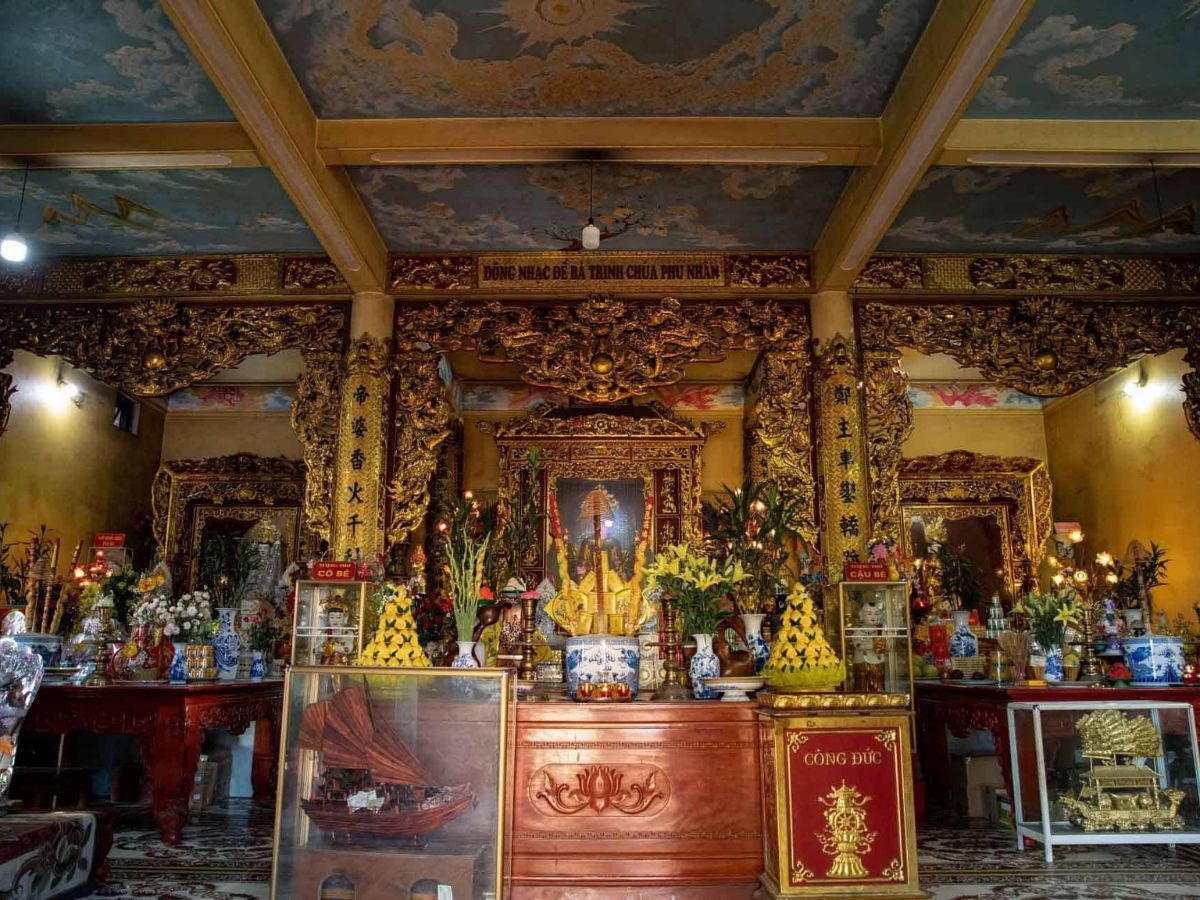
Ba De Temple is where the story of a talented and beautiful woman and her tragic injustice is preserved. (Source: Collected)
2.2. Symbol of compassion and spiritual efficacy in spiritual life
Over hundreds of years, the image of Ba De has not only been associated with tragic injustice but has also become a symbol of compassion and virtue. People believe that she is very spiritually efficacious, always bestowing good fortune upon those who are sincere, from praying for family peace to seeking blessings for couples. It is this sacredness that has made Ba De Temple a spiritual refuge for fishermen and tourists.
2.3. Mystical elements that make tourists curious about Ba De Temple
The spiritual space at Ba De Temple is made even more mystical by elements tied to age-old legends, such as the sacred well, believed to always bring luck to the sincere; the rituals for seeking blessings and warding off misfortune that tourists often seek at the beginning of the year; or the story of the rope and stone mortar that rotted according to the curse of the maiden De, to prove her eternal injustice.
3. Architecture and characteristic space of Ba De Temple
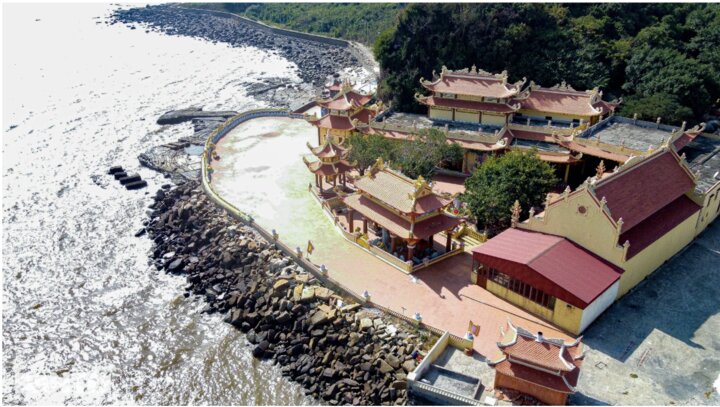
The space of Ba De Temple is harmoniously arranged according to traditional structure, beginning with a triple-arched gate leading into a spacious courtyard open to the sea breeze. From the main courtyard, visitors enter the main hall where Ba De and her parents are worshipped, forming the most sacred center of the complex. To the left is the altar for the Sea King, Mountain King, Earth King, and all beings, while to the right is the altar of the Three Palaces of Holy Mothers, clearly reflecting the Mother worship tradition characteristic of coastal residents. Behind the main hall is the Ba De cave and the Quan Am tower area, possessing a mystical aura with natural rock formations and dim lighting, further enhancing the spiritual depth of the place of worship.
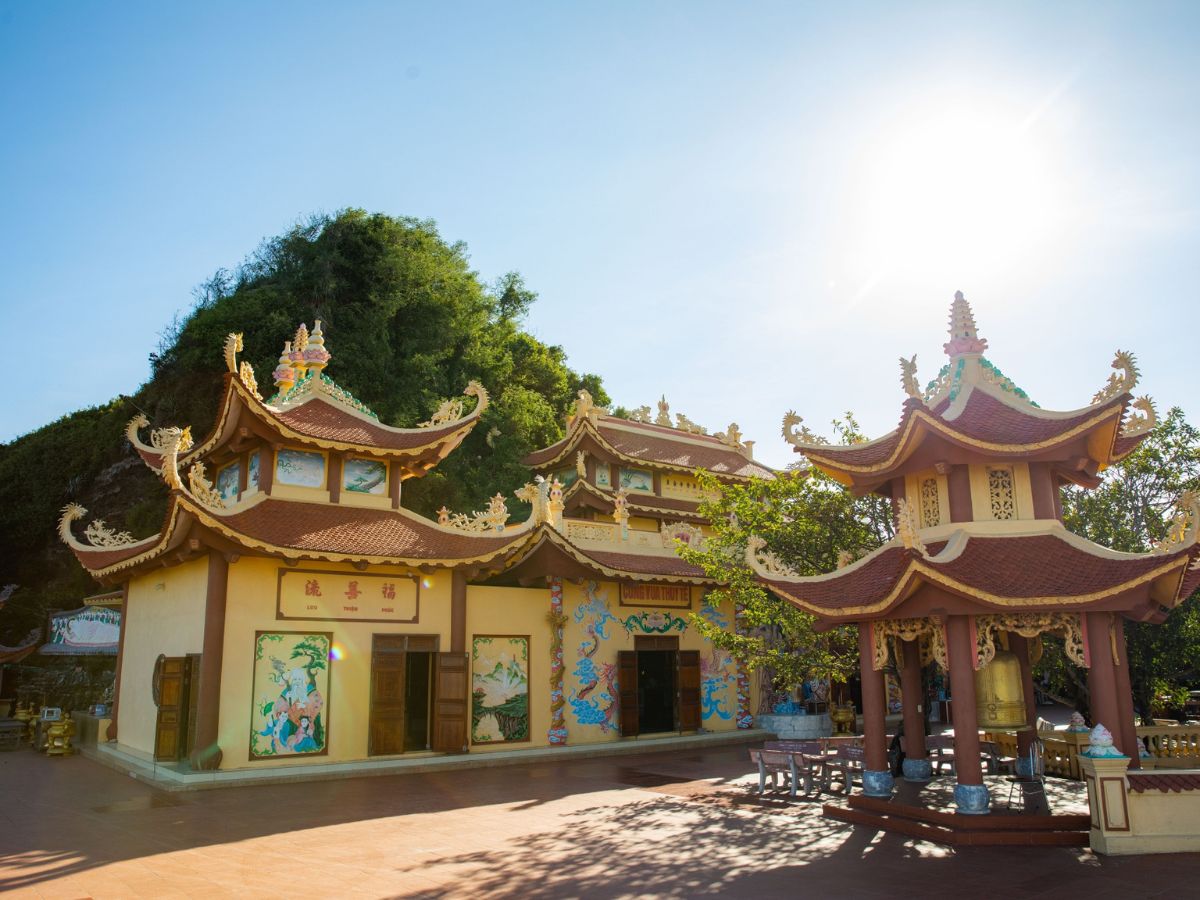
The unique architecture of Ba De Temple in Hai Phong attracts tourists. (Source: Collected)
The artistic features at the temple are expressed through intricate carvings of dragons, phoenixes, and mythical creatures on wooden pillars, screens, and the distinctive upturned roof edges, all adorned with vibrant lacquer and gold leaf. Precious artifacts such as the royal decree from King Tu Duc titled “Dong Nhac De Ba”, the statue of Mother Lieu Hanh, and the altar for the Sea King - Mountain King, demonstrate the harmonious blend of folk beliefs and Buddhism in the spiritual life of the people of Do Son. All of this is set amidst the majestic landscape of Doc Mountain and the Northeast Sea, where the red temple roof stands out against the grey rocks and the sound of crashing waves, creating a rare sacred atmosphere.
4. Festivals and Spiritual Rituals at Ba De Temple
4.1. Annual Main Festival
The grandest festival at Ba De Temple takes place from the 15th to the 17th of the second lunar month, attracting a large number of tourists and residents of Do Son. During these days, traditional ceremonies such as palanquin processions, offerings, incense burning, and folk singing are solemnly held to commemorate Ba De and pray for a peaceful year. The sound of festival drums mingling with the sea waves creates an atmosphere that is both sacred and vibrant, characteristic of coastal festivals.
4.2. Rituals for Love, Fortune, and Peace at the Temple
Besides the main festival, visitors come to Ba De Temple year-round to offer incense, praying for peace, love, or to perform rituals for warding off bad luck according to local customs. Offerings typically include fruits, cakes, and incense; many people also abstain from meat and fish during rituals to show their sincerity. These ceremonies carry the meaning of pursuing good deeds, helping visitors find balance in life and send their best wishes.
4.3. Cultural Activities and Beliefs Attracting Tourists
The temple space frequently hosts characteristic cultural activities such as folk singing (hat van) and spirit mediumship (hau dong), which are closely associated with the Vietnamese Mother Goddess worship. This is also a time when tourists can experience the spiritual life of the Do Son residents, admire the vibrant costumes, graceful singing, and solemn rituals preserved through generations.
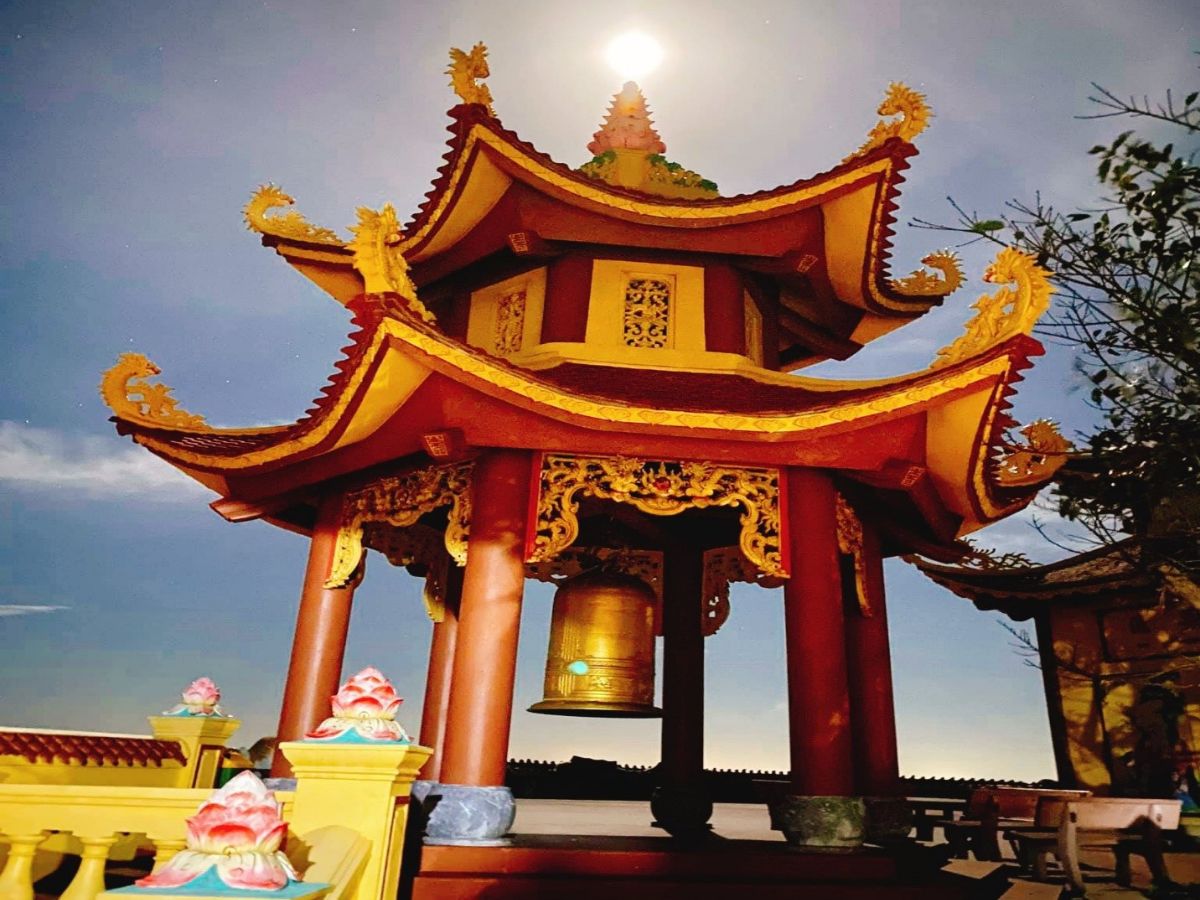
Many cultural activities are organized at Ba De Temple annually. (Source: Compilation)
5. How to get to Ba De Temple
5.1. Traveling from Hanoi to Ba De Temple
From Hanoi, visitors can reach Ba De Temple via the Hanoi – Hai Phong Expressway (CT.04), a distance of about 120 km, taking 1.5–2 hours by car or motorbike, then continue on Pham Van Dong street towards Do Son to the foot of Doc Mountain. If traveling by coach, companies like Hoang Long or O Ho depart from Gia Lam, Nuoc Ngam, or My Dinh with prices ranging from 150,000–250,000 VNĐ, taking 2.5–3.5 hours. Another option is the LP3/HP1 train from Hanoi Station to Hai Phong Station at a price of 125,000–150,000 VNĐ, taking about 3 hours, then take a 30-minute taxi ride to the temple.
5.2. Traveling from Ho Chi Minh City and distant provinces
Visitors from Ho Chi Minh City can fly to Cat Bi Airport with a flight duration of about 2 hours and ticket prices ranging from 1,200,000–2,500,000 VNĐ depending on the airline and time of booking. From the airport, the journey to Ba De Temple is quite convenient by taxi or Grab, covering 25–30 km in 30–45 minutes, costing 300,000–500,000 VNĐ. For distant provinces like Da Nang, you can choose to fly to Cat Bi and then continue by taxi or coach depending on your needs.
5.3. Traveling within Hai Phong city to the temple area
From the center of Hai Phong, visitors can easily reach Ba De Temple by bus routes 03 or 07 for only 10,000–25,000 VNĐ, taking 45–60 minutes via Pham Van Dong – QL353. Mai Linh or GSM taxis are a faster option, taking about 30–40 minutes and costing 200,000–300,000 VNĐ. If you prefer independence, you can rent a motorbike for about 150,000 VNĐ/day and follow the route from Rao Bridge – Do Son to the foot of Doc Mountain.
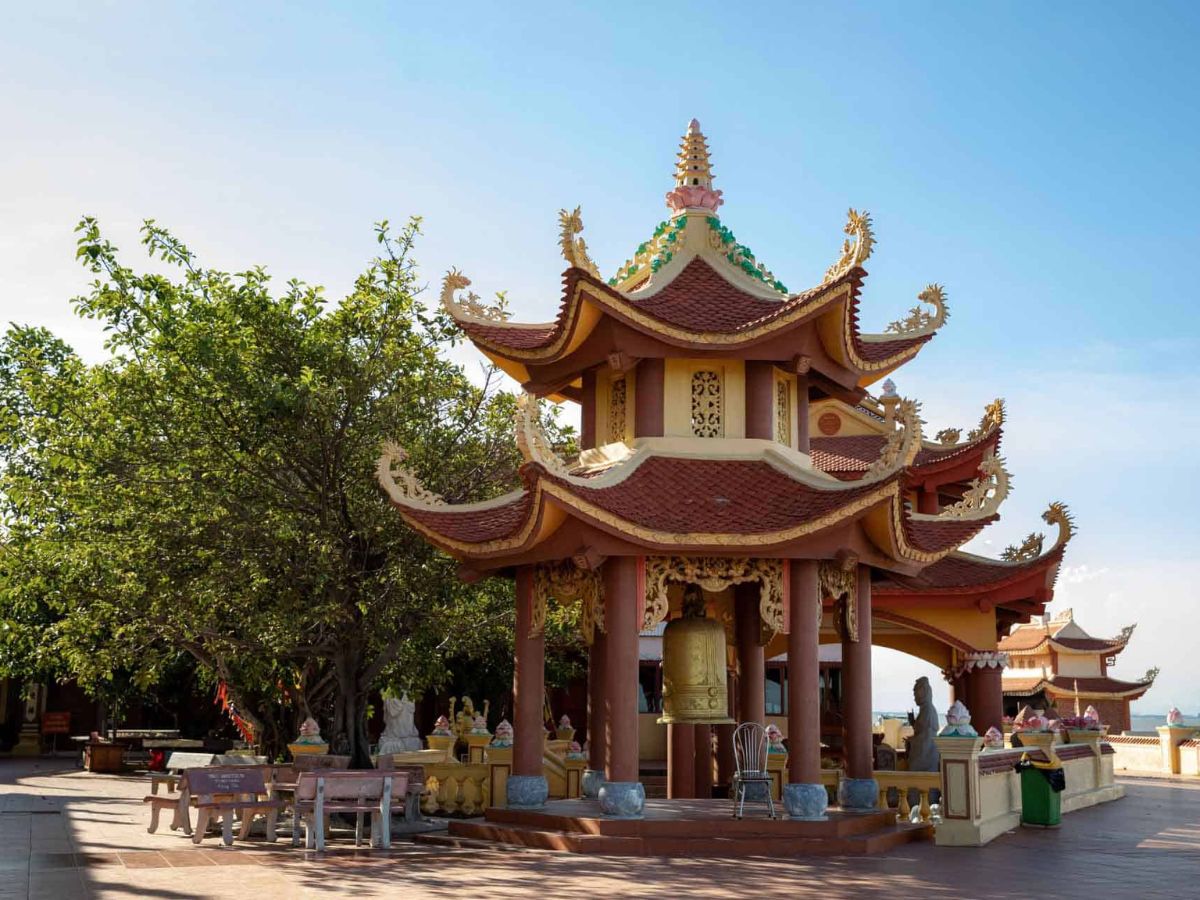
Visitors can easily travel to Ba De Temple from the center of Hai Phong. (Source: Collected)
6. Experiences for Visitors at Ba De Temple
6.1. Incense Offering Ceremony and Learning about Historical and Spiritual Stories
Upon arriving at Ba De Temple , visitors often begin their journey by offering incense at the main hall to pray for peace and good fortune for their families. Here, visitors can listen to stories surrounding the legend of Ba De, who is revered by the people as a symbol of virtue and protection. Notably, the occasion of the 9th day of the first lunar month always attracts a large number of pilgrims thanks to the solemn and deeply spiritual atmosphere of the festival.
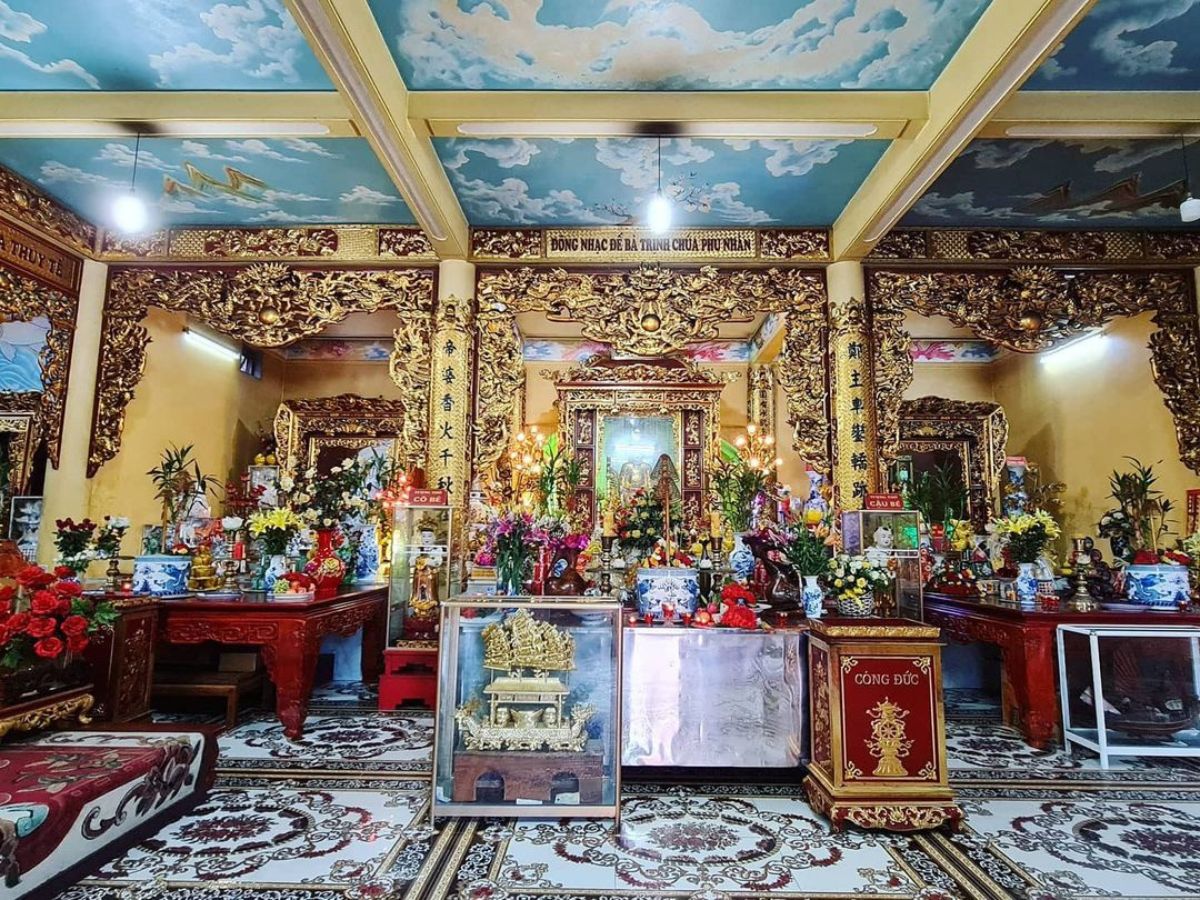
Offer incense in the shrine of Ba De Temple, Hai Phong. (Source: Collected)
6.2. Explore Ba De Cave
From the main hall, visitors can follow the stone path leading up to Ba De Cave on the slope of Doc Mountain, which is believed to be associated with the spiritual cultivation and divine transformation of Princess De. The cave's interior space is mystical, thanks to natural stalactites, dim lighting, and winding paths that seem to lead back to ancient stories. This experience helps visitors feel the tranquility and spiritual depth that the temple has preserved for generations.
6.3. Check-in Do Son Beach Scenery from the Temple Area
An unmissable experience when visiting Ba De Temple is admiring Do Son Beach from the foot of Doc Mountain. The early morning from 5–7 AM is gentle with pink sunlight on the sea surface, while the sunset from 4–6 PM is vibrant and romantic, ideal for visitors to capture frames of crashing waves, sky and clouds, and the distinctive curved red temple roof.
7. Nearby Attractions to Ba De Temple
Close to Ba De Temple, visitors can combine a stroll along Do Son Beach – one of Hai Phong's famous resort paradises with its gentle sandy shore and fresh sea air. Chua Hang or Thien Phuc Tu is also an interesting stop, located in a natural mountain crevice with a sacred atmosphere and a wide sea view. A bit further is the Do Rong tourist area, which hosts many modern activities such as an artificial beach, a water park, and a sea square suitable for the whole family.
Besides, visitors interested in learning about local culture can visit the Do Son Casino area, which bears the mark of old French architecture, or take a walk through the Do Son pedestrian street and seafood market to enjoy fresh local specialties.
8. Suggested Itinerary for Visiting Ba De Temple and Do Son
Visitors should start their day at Ba De Temple around 7:30–8:00 AM to enjoy the cool air and sacred atmosphere at the foot of Doc Mountain. After offering incense and exploring Ba De Cave, you can move to Do Son Beach (Zone II) for a walk, photos, or a relaxing foot soak. Around 11:00 AM, visitors return to the central area to rest and prepare for a delicious fresh seafood lunch with dishes like tiger prawns, sun-dried mackerel, crab spring rolls, or sea snails.
After lunch and a rest, visitors travel about 35–40 minutes to Cat Hai to experience the Sun World Cat Ba cable car. This unique sea-crossing cable car, nearly 4 km long, offers spectacular views of Lan Ha Bay, Cat Ba National Park, and a beautiful cluster of rocky islands. The period from 5:00 PM to 6:00 PM is the most ideal time to watch the sunset from above, when the entire sea surface is dyed gold and the sky opens up impressively. After the journey, visitors can return to Do Son or continue their journey by staying overnight in Cat Ba if they wish to explore further.
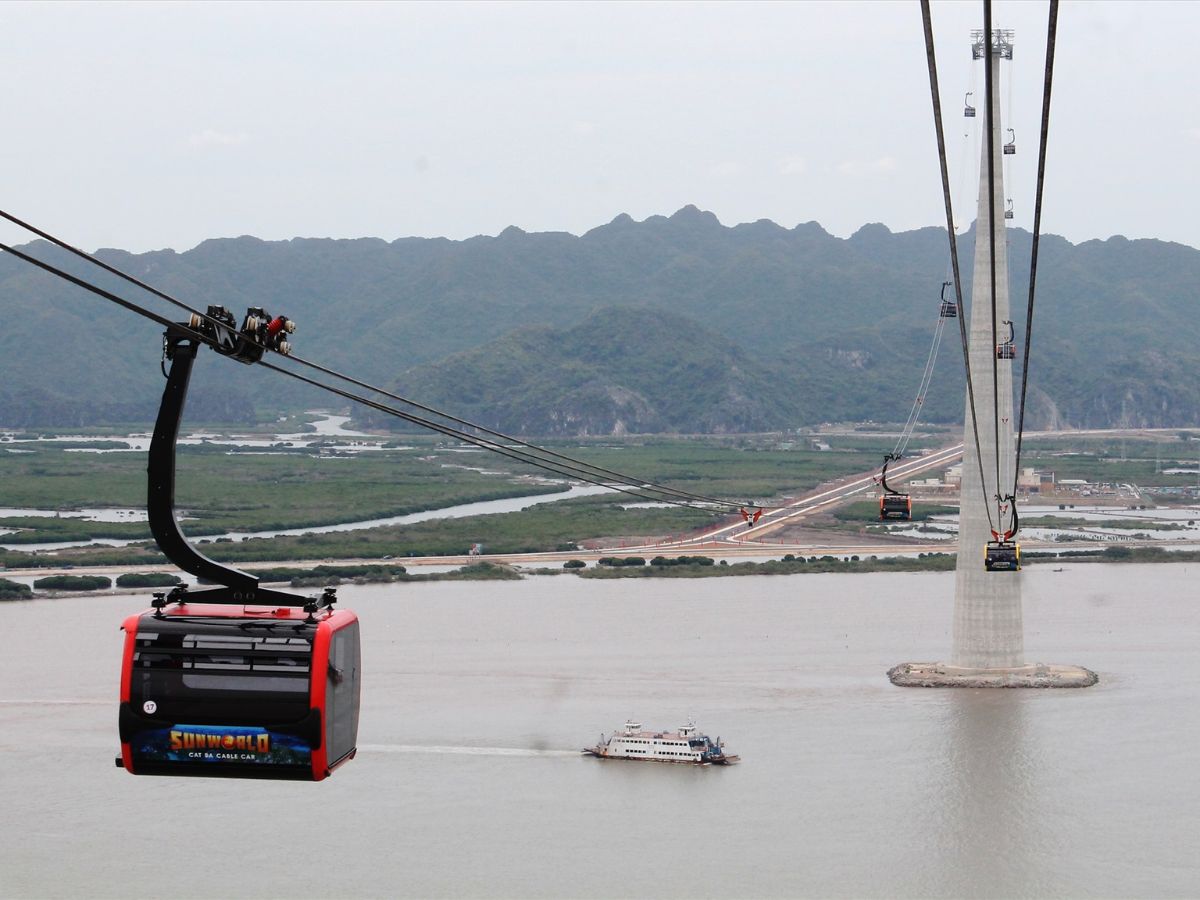
Experience riding the modern Sun World Cat Ba cable car to admire the sea view from above. (Source: Compilation)
9. Experience and notes when visiting Ba De Temple
When visiting Ba De Temple, tourists should choose modest and polite attire to suit the spiritual space, and prioritize comfortable footwear for moving around the temple area and the path to the cave. During the visit, maintain a solemn attitude, do not speak loudly, do not film or take photos in restricted areas, and follow the management's instructions. Especially, avoid touching the altars, artifacts, or burning excessive votive paper causing smoke. Maintaining general hygiene and behaving appropriately not only shows respect for the relic but also helps preserve the sacred beauty of this place of worship.
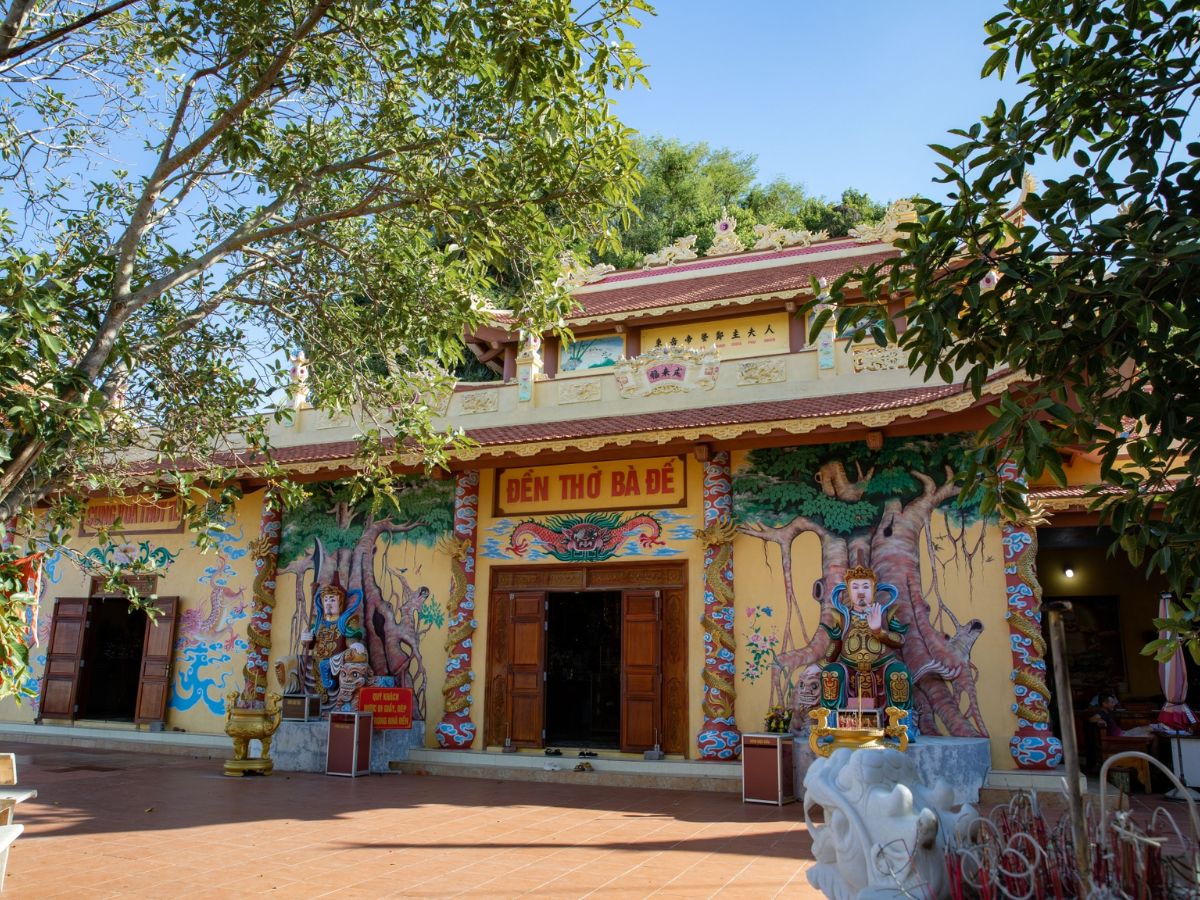
Tourists should maintain order and reverence when visiting Ba De Temple. (Source: Collected)
With a sacred space at the foot of Doc Mountain, touching legends, and the poetic scenery of Do Son sea, Ba De Temple is always a special stop on the journey to explore the Port Land. This place not only holds ancient cultural and spiritual values but also brings visitors moments of contemplation and peace.