
















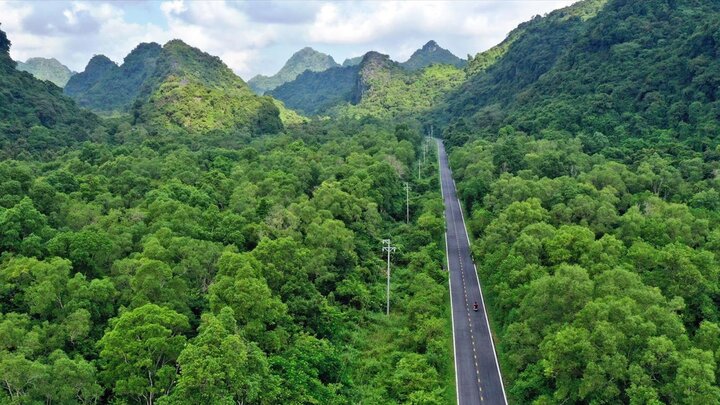
1. Introduction to Cat Ba Biosphere Reserve
1.1. Location, history of formation
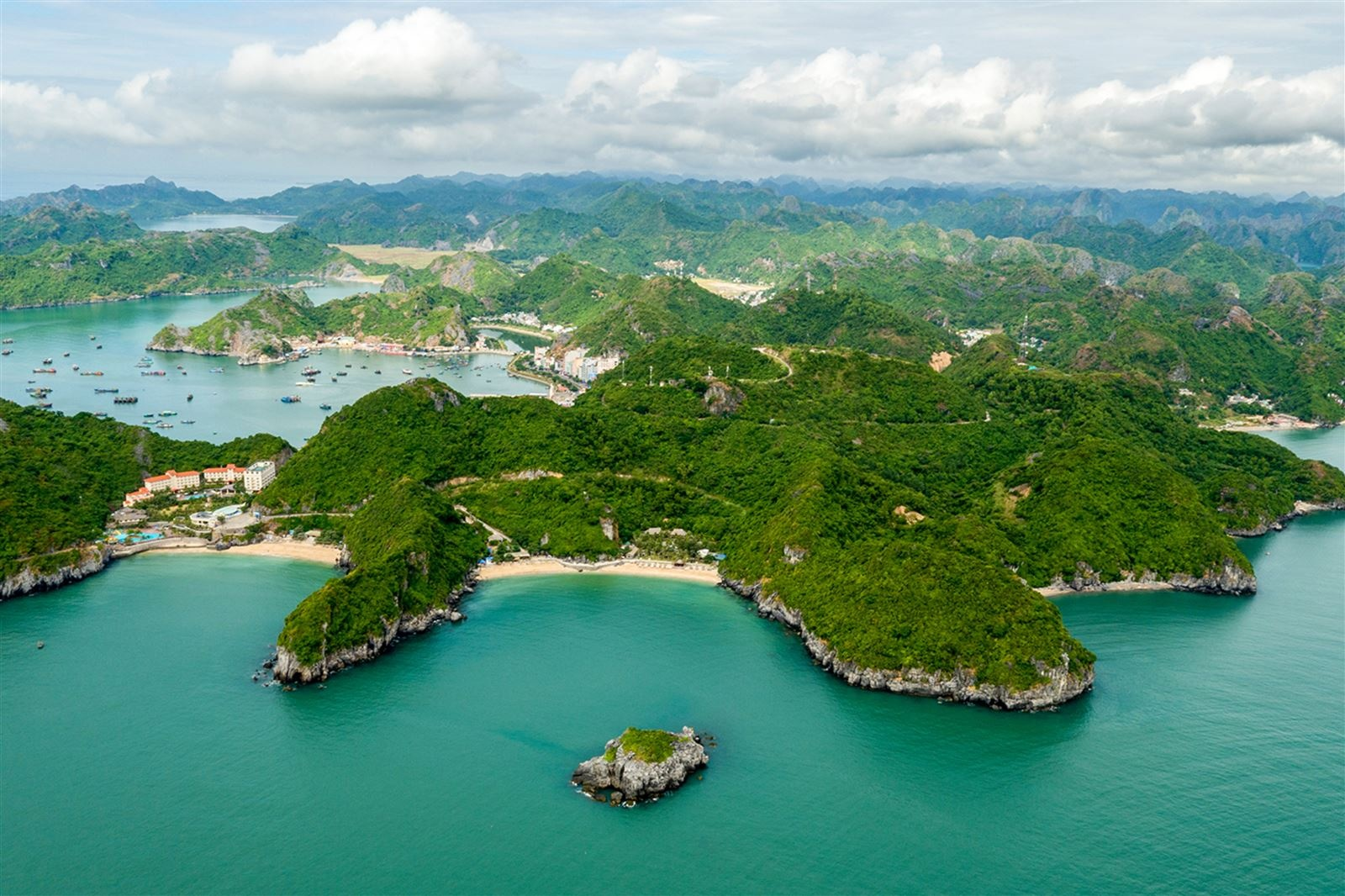
The Cat Ba Biosphere Reserve is located separately from the mainland. (Source: Collected)
The Cat Ba Biosphere Reserve is located within the Cat Ba National Park complex, belonging to the Cat Ba archipelago, Cat Hai special zone, Hai Phong city. With its geographical location completely separate from Hai Phong city, the biosphere reserve still maintains a diverse and almost intact natural ecosystem, thanks to conservation policies and support from many resources.
The Cat Ba Biosphere Reserve was recognized by UNESCO in December 2004 for its important values in biodiversity, landscape, culture, and socio-economics. In 2011, UNESCO nominated the Cat Ba archipelago for the list of World Natural Heritage sites, and it is still under review.
Notably, Lan Ha Bay, belonging to the Cat Ba biosphere reserve, was recognized as a member of the Club of the Most Beautiful Bays in the World in January 2020, contributing to making Cat Ba tourism one of the most prominent and sought-after destinations in Vietnam.
1.2. Scale of area and zones
The Cat Ba Biosphere Reserve has a total area of up to 26,241 ha, including 17,041 ha of Cat Ba National Park, 9,200 ha of marine ecosystem, along with 366 Karst limestone islands, accounting for about 90% of Cat Ba island's area.
The reserve is divided into several zones with different purposes: strictly protected zone, ecological restoration, ecotourism services, and scientific research. This division helps balance between natural conservation, tourism development, and scientific research, while preserving the pristine beauty of the Cat Ba archipelago.
2. Ecosystem of the Cat Ba Biosphere Reserve
2.1. Typical ecosystems and endemic species
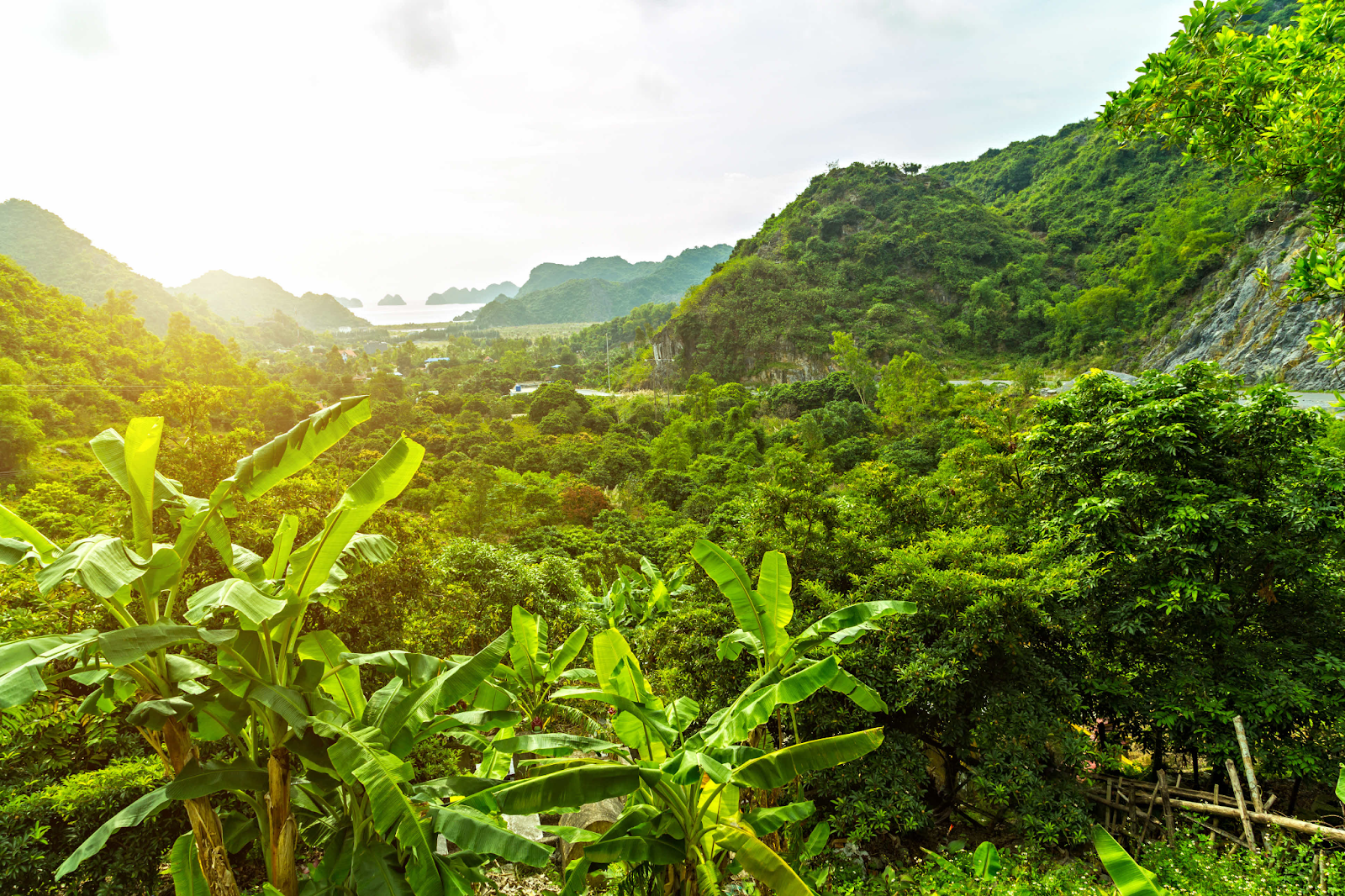
Diverse vegetation of the biosphere reserve. (Source: Collected)
Cat Ba Biosphere Reserve possesses a rich and diverse ecosystem, including primary forests and evergreen forests with over 1,588 plant species, notably rare species such as Kim giao, Trai ly, Cho dai, Lat hoa. Additionally, this area is home to many precious medicinal plants such as Thuyet giac, Xa den, Binh voi, Cot toai, Kim ngan, and La khoi, contributing to the archipelago's biological and medicinal value.
The terrestrial fauna is also very rich with 343 species of vertebrates, including 58 species of mammals, 205 species of birds, 80 species of reptiles, and 274 species of insects. A special feature is the presence of the Golden-headed langur, one of the 25 most endangered primate species in the world, making Cat Ba Biosphere Reserve one of the important conservation areas.
2.2. Special geological and landscape values
Cat Ba stands out with its Karst limestone terrain, fascinating caves, lush green valleys, white sandy beaches, and beautiful small bays. The geological and landscape connection with Ha Long Bay and Lan Ha Bay creates a unique island system, possessing both ecological value and a highlight of natural scenery, completely different from other islands in the region.
3. Ancient archaeological sites at Cat Ba Biosphere Reserve
3.1. Archaeological and historical sites
Cat Ba Biosphere Reserve possesses 77 important archaeological sites, marking many stages of human cultural and historical development on the island. Among them, the Cai Beo archaeological site is the most prominent, with artifacts and cultural traces from 6,400–4,200 years ago, providing valuable information about the life, activities, and craftsmanship techniques of ancient inhabitants.
Additionally, Hoa Cuong limestone cave is also an important archaeological site with fossils such as ancient apes, hedgehogs, and rhinoceroses, reflecting the biodiversity and natural environmental conditions of the prehistoric period.
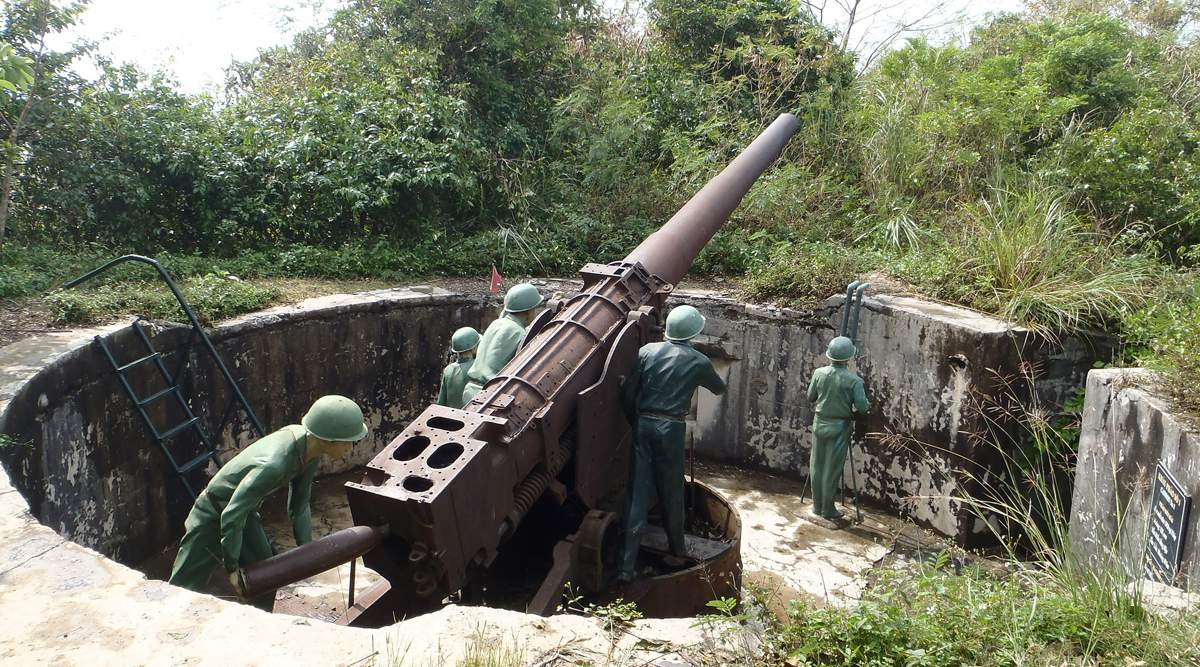
(Source: Collected) The Than Cong Fortress is also a prominent tourist attraction.
The Than Cong Fortress carries military historical value, once a strategic base important in wars against invasion, and an ideal viewpoint to observe the entire Cat Ba archipelago.
3.2. Current Cultural Identity
Nowadays, the biosphere reserve still preserves its traditional cultural identity through characteristic festivals of the islanders, such as the Fish Village Festival, Boat Rowing Festival, and Hien Hao Commune Mother Goddess Temple Festival. In addition, fishing villages like Viet Hai still maintain traditional customs, fishing, and farming, as well as marine environmental protection activities, contributing to preserving cultural and historical values while creating unique eco-tourism experiences for visitors.
4. Guide to Traveling to Cat Ba Biosphere Reserve
4.1. Traveling to Hai Phong
To get to the Cat Ba Biosphere Reserve, visitors first need to travel to Hai Phong, the main transit point. From Hanoi and other localities, you can choose buses, private cars, or trains depending on your time and experience needs. The journey usually takes about 2-3 hours, offering the opportunity to admire the plains and suburbs of Hai Phong.
4.2. Traveling to Cat Ba Island

The cable car journey begins at Cat Hai station. (Source: Collection)
From Hai Phong to Cat Ba island, visitors can choose to travel by Sun World Cat Ba cable car, connecting Cat Ba island with Cat Hai. The cable car trip takes only about 15 minutes, saving considerable time compared to the ferry. Throughout the journey, visitors can admire the panoramic view of Lan Ha Bay with hundreds of undulating limestone islands, long stretches of white sandy beaches, lush primeval forests, and peaceful fishing villages.
Additionally, visitors can travel by ferry or speedboat, experiencing the sea breeze and cool air on the bay.
5. Unmissable experiences at Cat Ba Biosphere Reserve
5.1. Trekking and exploring the primeval forest
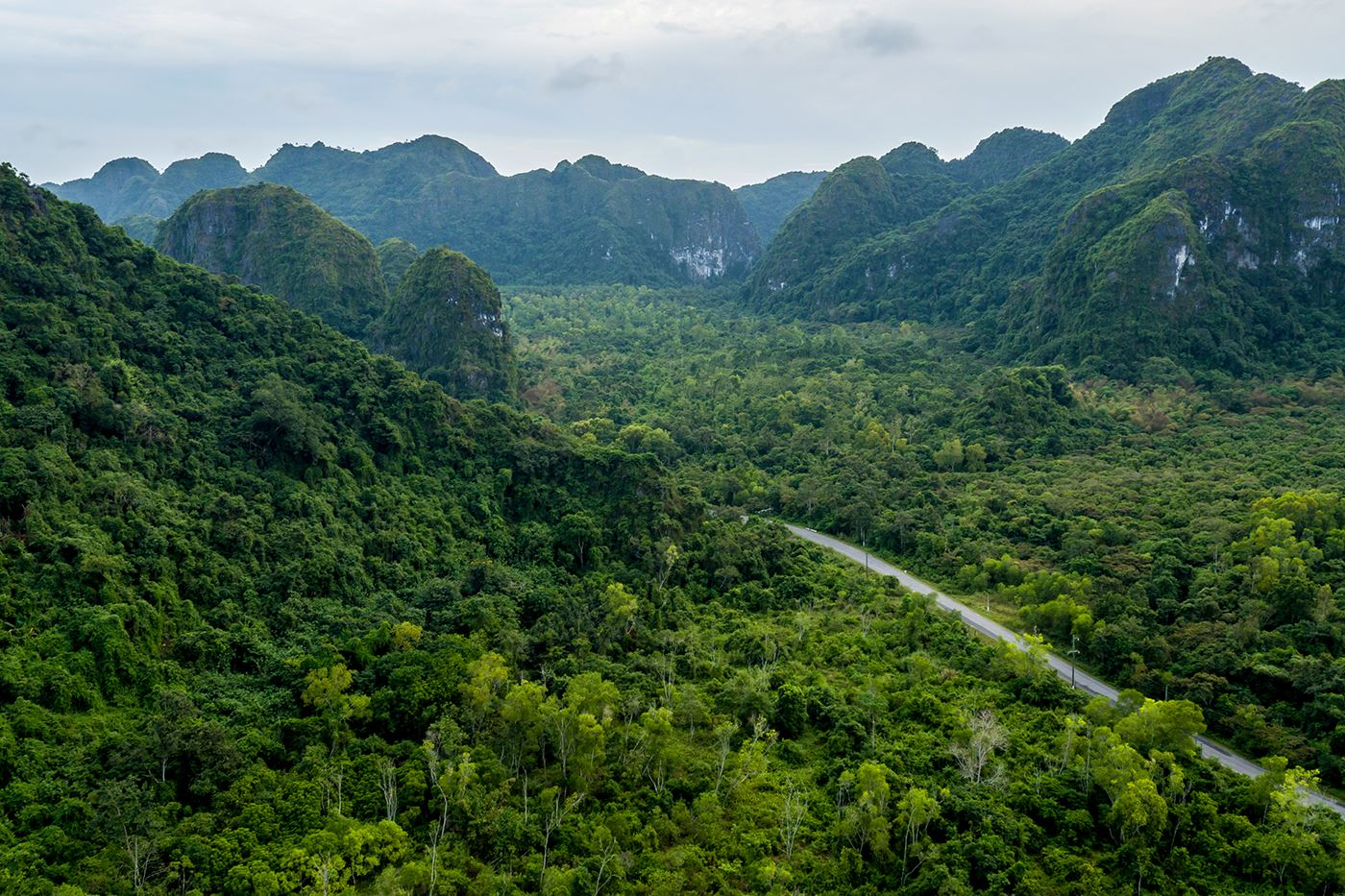
Unique forest trekking routes in Cat Ba Biosphere Reserve. (Source: Collected)
Cat Ba Biosphere Reserve boasts unique trekking routes, suitable for both beginners and exploration enthusiasts. Visitors can choose prominent trails such as the Kim Giao forest leading to Ngu Lam peak, offering panoramic views of the entire island; Ech Pond – Viet Hai, an experience of walking through the forest, checking in amidst lush green valleys; or May Bau – Quan Y cave, a place that both challenges physical strength and explores the pristine ecosystem.
On these routes, you will have the opportunity to conquer mountain peaks, capture stunning photos in valleys and caves, and observe many endemic flora and fauna of the island.
5.2. Visiting caves, lakes, small islands
Besides trekking, the mangrove forests and primeval gardens are associated with many fascinating caves such as Trung Trang cave, Thien Long cave, Quan Y cave, each with its own geological and ecological beauty and story.
Small islands like Van Boi, Hon But, Cat Dua, or Ba Trai Dao offer diverse exploration experiences, from kayaking, visiting pristine beaches to observing the lives of endemic marine life and water birds.
5.3. Kayaking to admire the bay
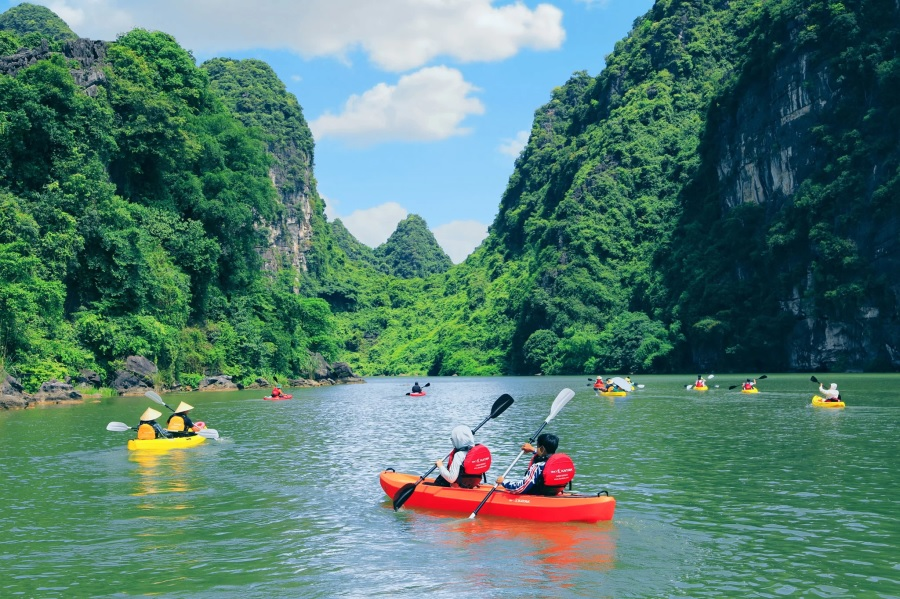
Tourists experience kayaking to admire the bay. (Source: Collected)
One of the unmissable experiences at Cat Ba Biosphere Reserve is kayaking on Lan Ha Bay and the small islands. Visitors can steer the boat themselves or join a guided tour, both exercising and discovering unique perspectives of the bay.
Throughout the journey, you will get close to the undulating limestone islands, small caves, and pristine beaches, admiring the clear blue water reflecting the sky and the surrounding primeval forests. This is an ideal activity to enjoy peace, take stunning photos, and experience nature in the most intimate way.
5.4. Enjoying coastal seafood
After exploration activities, enjoying fresh seafood by the coast is the perfect experience to complete the trip. Fishing villages and restaurants near Lan Ha Bay offer a variety of dishes from fish, shrimp, crab, squid, and oysters, prepared in local style.
6. Tips for visiting Cat Ba Biosphere Reserve
6.1. Best Time and Packing
The ideal time to explore Cat Ba Biosphere Reserve is usually from March to May and September to November, when the weather is cool, with little rain and calm seas, favorable for trekking, kayaking, and visiting small islands.
When packing, visitors should bring comfortable trekking shoes, a wide-brimmed hat, sunscreen, drinking water, along with a raincoat or light windbreaker in case of sudden weather changes. These items help make the journey safe and convenient when moving through primeval forests, caves, and beaches.
6.2. Environmental Protection and Safety Notes
When visiting the conservation area, visitors must comply with regulations on forest and wildlife protection, not littering or harming flora and fauna. Avoid getting too close to wild animals and always maintain a safe distance when trekking through difficult terrain or kayaking on the bay. Adhering to these notes not only helps protect the environment but also ensures personal safety, while contributing to preserving the unique ecological value of Cat Ba Biosphere Reserve.
With its rich ecosystem, long-standing cultural and historical values, and unique sea-forest landscape, Cat Ba Biosphere Reserve is a wonderful destination for nature lovers who want to experience ecotourism and learn about local culture. Plan a complete trip to witness the unique beauty of Cat Ba Island with your own eyes.